

Dr. Moses V. Chao to Deliver Keynote at the Rutgers Brain Health Institute Symposium 2025

The Rutgers Brain Health Institute (BHI) is delighted to announce Moses V. Chao, PhD, as the keynote speaker for our BHI Symposium on December 3, 2025. Dr. Chao, a renowned neuroscientist at NYU Grossman School of Medicine, is celebrated for his groundbreaking research on neurotrophic factors, which has revolutionized our understanding of neuronal development, plasticity, and their implications for neuropsychiatric and neurodegenerative disorders. He has published more than 500 scientific papers and has been cited more than 58,000 times.
As Professor of Cell Biology, Neuroscience & Physiology, and Psychiatry, Dr. Chao’s innovative work integrates molecular biology, receptor signaling, and behavioral neuroscience to unravel the brain’s complex mechanisms. His visionary leadership has established him as a pivotal figure in advancing neuroscience research.
Join us in celebrating Dr. Chao’s remarkable contributions at this exciting event!
Early Life and Education
Dr. Chao’s early passion for science led him to earn a BA in Biochemistry from Pomona College in 1973. He completed his PhD in Biochemistry at UCLA, studying chromatin structure at the Molecular Biology Institute. His postdoctoral training (1980 -1983) under Nobel laureate Richard Axel at Columbia University honed his molecular biology expertise, laying the groundwork for his pioneering research on neurotrophins.
Pioneering Research
Dr. Chao’s research at NYU focuses on neurotrophic factors, particularly nerve growth factor (NGF) and brain-derived neurotrophic factor (BDNF), critical for neuronal growth, survival, and synaptic plasticity. His lab’s discoveries of the p75 and TrkA receptors for NGF (Cell, 1986; Nature, 1991) elucidated their roles in high-affinity binding and signal transduction, advancing our understanding of neural circuit development. His work has had a lasting impact on neuroscience, particularly in understanding neuronal connectivity and resilience.
Dr. Chao’s research also explores neurotrophins’ roles in adult brain function, including depression, anxiety, chronic pain, addiction, and obesity. His discovery of receptor transactivation (PNAS, 2001; Nature Neuroscience, 2008), where G protein-coupled or steroid receptors activate Trk receptors without neurotrophins, has opened new therapeutic avenues for Alzheimer’s and Parkinson’s diseases. His studies on exercise-induced BDNF elevation via metabolites like β-hydroxybutyrate (eLife, 2016) link physical activity to cognitive enhancement. Additionally, his work on oxytocin signaling (Nature, 2015; J Neuroscience, 2016) highlights its role in social cognition and potential treatments for autism and schizophrenia. Currently, his lab investigates how neurons achieve trophic factor independence, a key mechanism for neural longevity and resilience against neurodegeneration.
Leadership and Mentorship
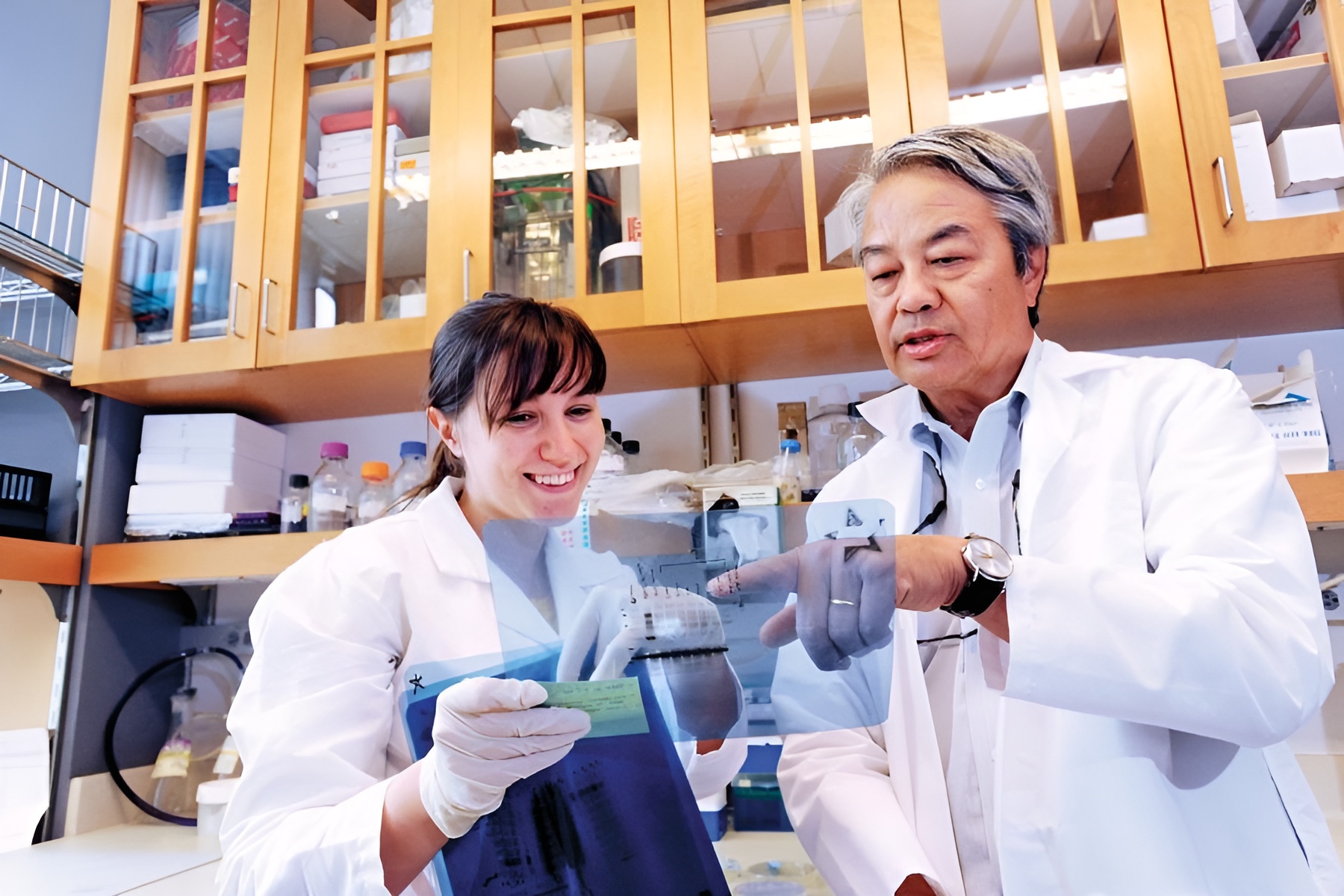
Dr. Chao’s influence reaches far beyond the laboratory. He served as President of the Society for Neuroscience in 2012, after roles as Secretary (2006–2009) and Senior Editor of the Journal of Neuroscience (2006–2011). He currently contributes as an editor for Proceedings of the National Academy of Sciences (2025–present) and eLife (2015–present) and advises organizations such as the Simons Foundation, Pershing Square Foundation, Pritzker Foundation, and Target ALS. As Director of the NYU Neuroscience Institute Graduate Program (2016–2019), Dr. Chao has mentored numerous students, fostering the next generation of neuroscientists with a commitment to scientific rigor and innovation.
Honors and Recognition
Dr. Chao’s contributions have earned him prestigious honors, including election to the National Academy of Sciences (2023), a Guggenheim Fellowship (1994), the Julius Axelrod Prize (2017), the Jacob Javits Neuroscience Investigator Award (1996–2003), and the Zenith Award from the Alzheimer’s Association (1991–1994). A Fellow of the American Association for the Advancement of Science (2007), he has delivered keynote lectures worldwide, including at the World Congress on Psychiatric Genetics (2007), Australian Neuroscience Society (2014), and Academia Sinica (2018).
BHI Symposium Keynote Abstract
At the 11th Annual BHI Symposium, Dr. Chao’s keynote lecture, “Mysteries of Neurotrophic Factors,” will explore the role of neurotrophic factors in neuronal and glial cell function.
Neurotrophic factors, such as Nerve Growth Factor (NGF) and Brain-Derived Neurotropic Factor (BDNF), are potent signaling molecules that were originally characterized for their ability to regulate neuronal growth, survival, and differentiation during early development. However, in adults, trophic factors are more critical for synaptic plasticity and in neuropsychiatric disorders, including anxiety, depression, pain, injury, and mood disorders. Levels of BDNF have also been directly linked to metabolic syndromes, such as obesity and hyperphagia. Recently, it has been confirmed that mature post-mitotic neurons possess the ability to become independent of trophic factors for survival. The future aims are to understand how independence from trophic factors is achieved, which may represent a key factor in the longevity of the nervous system, as well as in neurodegenerative diseases.
Learn More & Get Involved
The Rutgers Brain Health Institute (BHI) is dedicated to advancing neuroscience through collaborative research and innovation. Join us in exploring the frontiers of brain health!
