


Fentanyl
Explore the science of fentanyl and the real-world steps that reduce overdose risk and support safety.
Staying Safe in a Changing Landscape
Fentanyl is a powerful medication used safely in medicine, but illicit forms have fueled a serious public health challenge. The good news: knowledge, tools like fentanyl test strips and Narcan (naloxone), and community support are saving lives every day. Many people recover with effective treatment, and research is advancing prevention and recovery options. You’re not alone—help is available, and informed steps can make a big difference.
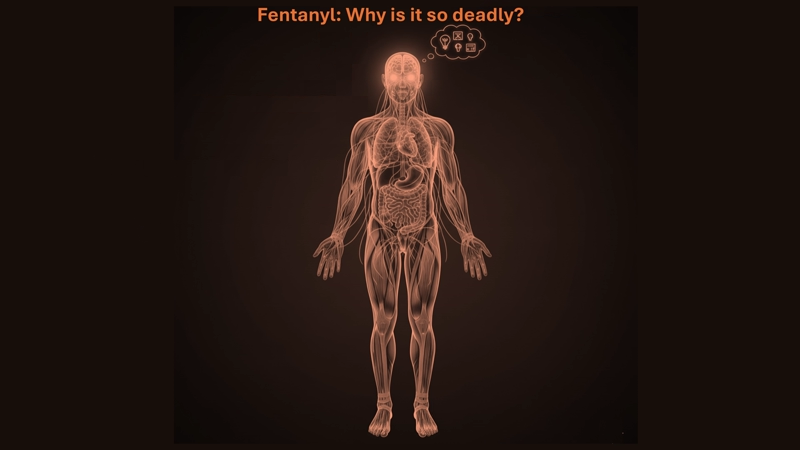
Fentanyl: Why Is It So Deadly?
Fentanyl can be deadly in very small amounts. Its extreme potency means even 2mg (a few grains of salt) can be lethal for someone without tolerance.
This toolkit explains why, where the risk comes from, and how to respond.
Fentanyl Test Strips: A simple tool to help stay safer
Fentanyl test strips (FTS) are inexpensive, easy-to-use strips that detect fentanyl in drugs (powder, pills, residue). They’re highly sensitive (detect ~20–200 ng/mL fentanyl) and help people avoid unexpected exposure.
How to Use Fentanyl Test Strips (Step-by-Step – CDC/Harm Reduction Guidance)
- Set aside a small amount of drug (~10mg or residue) in a clean container.
- Add water (½ teaspoon for most drugs; 1 teaspoon for meth/MDMA to reduce false positives). Mix well.
- Dip the wavy end of the strip into the solution for 15 seconds.
- Lay flat and wait 2–5 minutes for results:
- Two lines = Negative (no fentanyl detected).
- One line = Positive (fentanyl likely present).
- No lines/invalid = Retest with new strip.
Tips: Test a portion (don’t dissolve everything if you plan to use). Results are quick and reliable for fentanyl/fentanyl analogs, though not 100% for all variants or very low concentrations. Positive result? Use less, go slower, don’t use alone, or avoid altogether—and always have Narcan ready.
Where to get fentanyl test strips:
- Free or low-cost through local harm reduction programs, syringe services, health departments, or community organizations.
- Online from reputable vendors (around $1 per strip, discreet shipping).
- Search “free fentanyl test strips [your state]” or check NextDistro.org or local health resources.
Want to learn more?
These trusted sources offer additional facts, detailed guides, and research on how fentanyl test strips help people make safer choices. A nonprofit guide with practical tips and evidence on behavior change from Shatterproof; information from the Centers for Disease Control and Prevention (CDC) explains official U.S. public health approaches to harm reduction; and materials from the Substance Abuse and Mental Health Services Administration (SAMHSA) give a federal overview of fentanyl test strip programs, including how they are funded and distributed.
Frequently Asked Questions
Answers to common questions about fentanyl, overdose risk, and evidence-based ways to reduce harm.
-
When used as prescribed, fentanyl provides strong, fast pain relief and a sense of calm. Illicit use often causes intense euphoria, warmth, or a rush—but these effects hit very quickly and can feel overwhelming due to its potency. Many people describe heavy sedation, drowsiness, mental fog, slowed thinking, and reduced coordination afterward. The rapid intensity is part of what makes it risky.
-
Even prescribed fentanyl has risks (drowsiness, nausea, constipation, confusion), but they rise sharply with higher doses or illicit use. The most serious risk is overdose—fentanyl suppresses breathing, and because it’s so strong, this can happen fast. Other risks include dependence, tolerance (needing more for the same effect), and withdrawal symptoms if stopped suddenly. The good news: overdose is reversible with Narcan, and treatment helps many people recover.
-
Its extreme potency—50–100 times stronger than morphine—creates a tiny safety margin. Small variations in dose can be life-threatening. Illicit fentanyl is often unevenly mixed, so one hit or pill can be much stronger than expected. Combining it with alcohol, benzodiazepines, or other depressants multiplies the danger. Counterfeit pills add extra unpredictability.
-
Illicit fentanyl has driven much of the U.S. overdose crisis for over a decade due to its potency and frequent presence in other drugs. Many deaths involve polysubstance use (fentanyl mixed with heroin, cocaine, meth, etc.) or counterfeit pills mimicking prescriptions. A growing concern is overdoses among youth from fake pills that look like legitimate anxiety, ADHD, or pain medications.
-
Yes—it’s commonly laced into counterfeit pills (fake Oxy, Xanax, Adderall) or mixed with heroin, cocaine, meth, or other street drugs. People may think they’re taking something safer, but the fentanyl makes it unpredictable and far more dangerous. Use fentanyl test strips to check if fentanyl is mixed in with other drugs.
-
Yes, like other opioids—especially when used illicitly. Its potency can lead to rapid tolerance, dependence, and loss of control. Brain changes in reward and motivation circuits drive continued use despite harm. Dependence means the body adapts, leading to withdrawal (flu-like symptoms, anxiety, restlessness) if stopped. A clinician may diagnose opioid use disorder (OUD) when criteria like cravings, using more than intended, or continued use despite problems are met.
-
Fentanyl addiction is treatable and many people recover fully. The most effective approach combines medications for opioid use disorder (MOUD) with counseling and support. FDA-approved medications include:
- Methadone — Stabilizes function, reduces cravings/withdrawal (clinic-based).
- Buprenorphine — Reduces cravings, has a safety ceiling (office- or home-based, often Suboxone).
- Naltrexone — Blocks opioid effects (pill or monthly injection, Vivitrol).
These do not produce the same “high” as illicit opioids when taken as directed and cut overdose risk dramatically. Addressing the myth: “Am I just trading one addiction for another?” — No. These medications stabilize life and support recovery, not addiction. Many people combine them with therapy, peer support, or lifestyle changes for long-term wellness.
-
- Never use alone—have someone nearby or use a never-use-alone hotline.
- Start low and go slow with any new batch.
- Test with fentanyl test strips.
- Carry Narcan (naloxone)—available over-the-counter or free in many places.
- Avoid mixing with alcohol or benzodiazepines.
- Know overdose signs and call 911—Good Samaritan laws protect helpers in most states.
Got more questions or need support?
If you or someone you care about is struggling with opioid use, help is available. Explore trusted resources for treatment, recovery support, and guidance on what to do next.
Rutgers Experts on Fentanyl
BHI has launched a new public education series designed to help a general audience understand high-impact topics in brain health and neuroscience. We’re starting with fentanyl—one of the most searched and most urgent issues in substance use. Rutgers Brain Health Institute faculty share clear, research-informed insights from clinical, research, and policy perspectives to help readers understand what’s happening and what works.

Understanding Fentanyl

Understanding Fentanyl: A Research Perspective with Dr. David Barker
Understanding Fentanyl: A Policy Perspective with Dr. Elizabeth Stone
More Brain Health Insights for You
Explore more BHI for You articles for clear, research-informed information on brain health and neuroscience—designed to help you learn, make sense of the science, and take the next step.
